
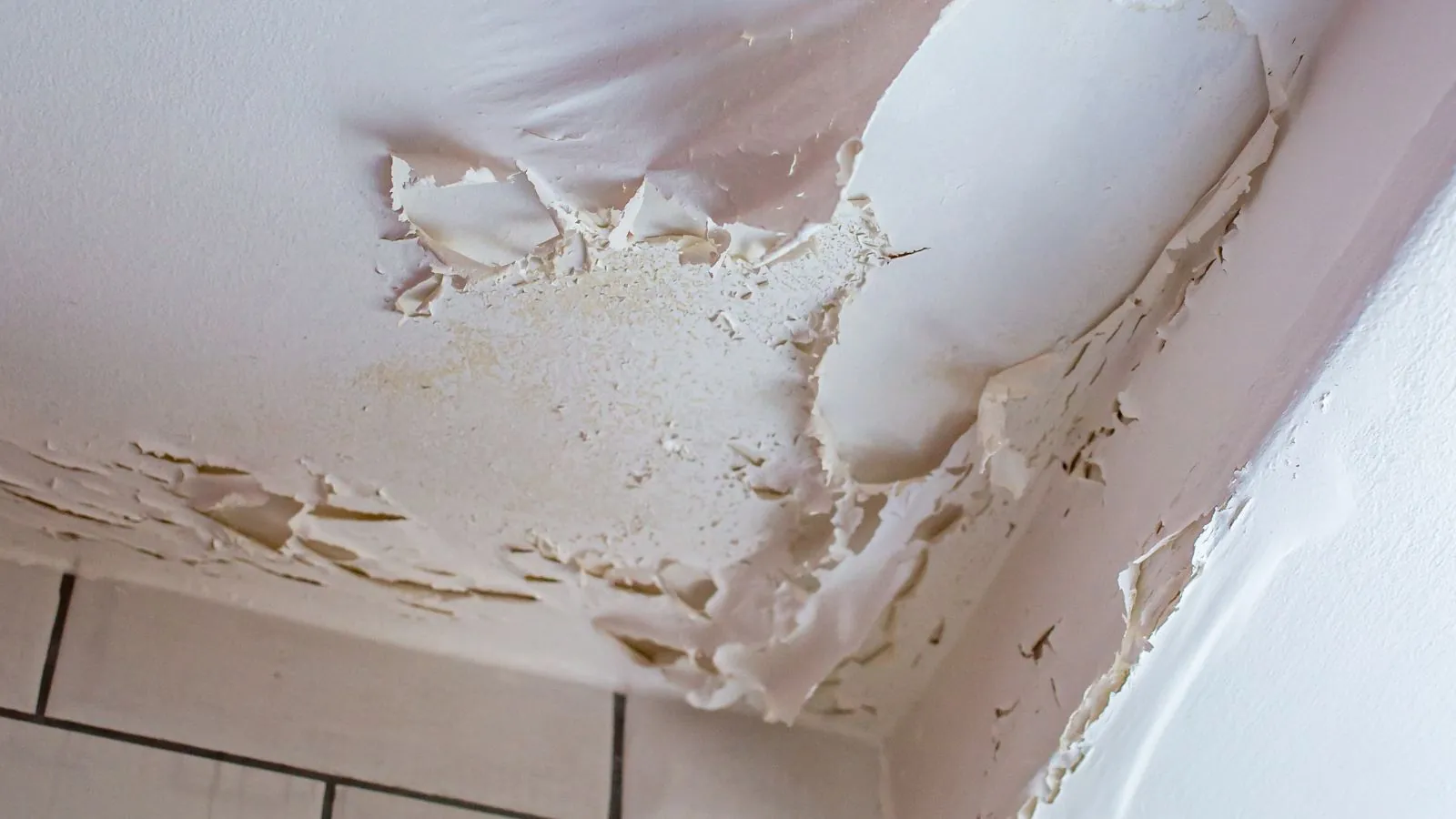
A stain on a wall or ceiling raises the same question every time. Is this a fresh leak that needs attention today or something from months ago that has already dried? The answer changes what you do next and how an insurer may view the claim.
No single clue is perfect, so the best approach combines several. A moisture meter and a thermal camera give the clearest answers, but you can learn a lot with your eyes and hands first.
What fresh water damage usually looks like
Wet and cool to the touch
Fresh damage feels damp, and walls or ceilings may feel colder than nearby surfaces.
Soft and sagging
Drywall that is actively wet loses strength and bulges.
Dark, uniform stain
A new stain often has soft edges and a single tone.
Active drips and sounds
Dripping, hissing or running water points to an active leak.
What older damage tends to look like
Water that dried long ago leaves a different record. Look for ring stains, where repeated wetting and drying leaves several outlines at the edge of a stain. Each ring marks another episode of moisture.
- Brown or yellow rings with crisp edges.
- Hard, dry drywall that is stained but not soft.
- Peeling or cracked paint where it dried in layers.
- Discoloration with a musty odor but no current moisture.
- Warped flooring that has stayed in place for a long time.
Older damage can still need repair, and it can hide mold or weak materials. It simply does not need the same emergency response as active water.
Tools that settle it
| Tool | What it tells you |
|---|---|
| Moisture meter | Shows whether drywall, wood or concrete is wet right now. |
| Thermal camera | Shows temperature differences where evaporating water cools a surface. |
| Humidity reading | Shows whether air near the stain is unusually damp. |
| Pressure test | A plumber can tell whether supply lines are leaking. |
| Photos over time | Show whether a stain is growing. |
Readings taken on a stain and on a dry wall in the same room give the clearest comparison.
Our structural drying page explains how readings are compared, and ceiling water damage repair describes what ceiling stains can mean.
Why it matters for repairs and claims
Active damage needs drying before any repair. Painting over a wet stain traps moisture. Old damage may need only a repair once the source is confirmed to be fixed.
Insurers also ask when the damage started. A long-standing stain can be treated as gradual damage, while a documented recent event is more often treated as sudden. We are not insurance advisors, so ask your insurer how your policy handles the timeline.
What to do next
- Photograph the stain with something for scale.
- Mark its edge with a pencil and date it.
- Check again in a few days to see whether it grows.
- Look above it for plumbing, an air handler or a roof.
- Call a restoration company if it grows or feels damp.
- Call a plumber or roofer to fix the source.
If the stain grows after rain, a roof or window is likely involved. If it grows without rain, look for plumbing or air conditioning. See AC leak water damage for common condensate problems.
What a professional looks for
A technician compares readings from the stain, the area around it and a dry reference wall. We also check the attic, the plumbing above and the roof line, because the source tells us whether the water is still active. Photos and readings are saved so a stain can be tracked over time.
If you are unsure, take dated photos now and again in a week, since change over time tells its own story.
According to the published ANSI/IICRC S500 water damage standard, the speed and method of drying decide how much of a structure can be saved, which is why this guide stresses acting early.
Local note on 2024 storm damage
Hillsborough County released a Regional Stormwater Evaluation that covers cumulative flooding from seasonal rainfall and Hurricanes Debby, Helene and Milton in 2024. A home that took on water in more than one of those events can show layered stains, so an old stain may predate the most recent storm. This applies in places like Lithia and Durant too, and your insurer can explain how the timeline affects a claim.
Old and new water damage questions Valrico homeowners ask
Can a water stain be old but still wet?
Yes. A stain can be old while a slow leak keeps feeding it. A moisture meter reading is the way to tell.
Does a dry stain mean there is no mold?
No. Mold can grow inside walls while the surface looks dry. A smell or soft material suggests a closer look.
How do I know if the stain is from the roof?
Stains that grow after rain point toward the roof or a window. Stains that grow without rain point toward plumbing or air conditioning.
Will an insurer care whether damage is old?
Often yes. Policies treat sudden damage and gradual damage differently, so dated photos and readings help.
Did the 2024 hurricanes cause older damage in my area?
They may have. Hillsborough County evaluated cumulative flooding from Debby, Helene and Milton. If you are unsure, a meter reading and an inspection can help date the problem.