
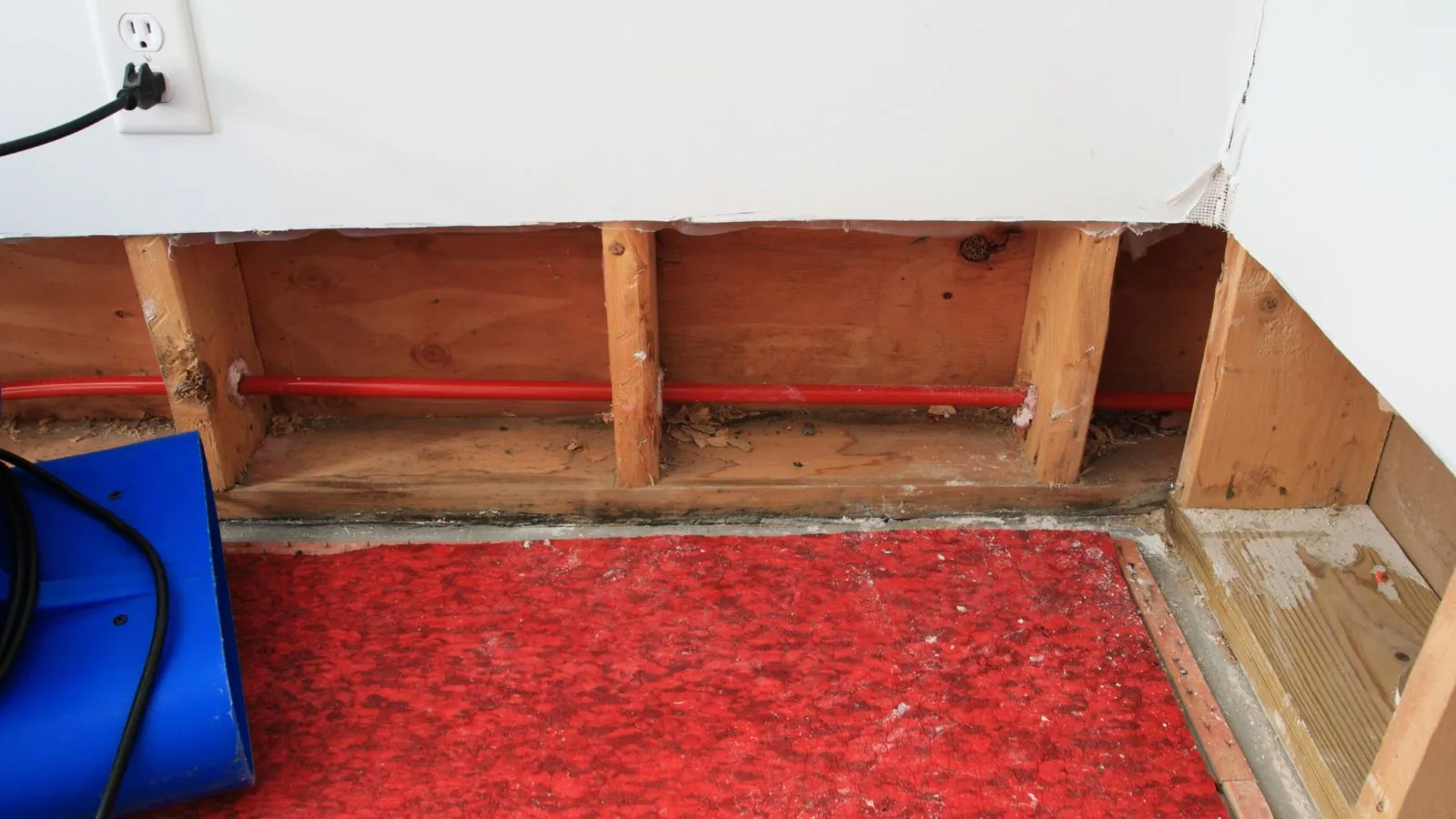
Water removal is only the first part of a water job. Walls, floors and framing keep moisture long after the surface looks dry, and Valrico air is humid enough to slow natural drying. Call our 24/7 line and we will measure what is still wet and build a plan.
Still smells musty or feels damp weeks after a leak?
That usually means moisture is trapped inside walls, under floors or in insulation. Surfaces can look dry to the eye while cavities stay wet. Floors that cup, paint that bubbles and a sour smell all point to moisture that was never fully removed.
Fans from a hardware store move air over the surface. They do not pull water out of framing or wall cavities, so the problem tends to come back.
How structural drying works
Drying uses controlled air movement and dehumidification to move moisture from materials into the air, and then out of the air into a collection system. The industry reference is the ANSI/IICRC S500 water damage restoration standard, which we follow as a guide for how drying is measured and documented.
Measure
Moisture meters and thermal imaging map wet areas and set a drying goal.
Place equipment
Air movers and dehumidifiers are placed to move air across wet surfaces.
Monitor daily
Readings on framing, subfloor and drywall show whether drying is on track.
Release equipment
Equipment is removed only after readings reach target levels.
Tools involved
Air movers
Fans that push air across wet surfaces to move moisture off them.
Dehumidifiers
Machines that pull moisture out of the air and carry it away.
Moisture meters
Instruments that read wetness inside drywall, wood and concrete.
Thermal cameras
Imaging that shows temperature differences where water hides.
Why heat and humidity change the plan
Valrico summers keep outdoor air warm and wet, so we often keep the house closed and rely on dehumidifiers rather than opening windows. In cooler months we may adjust equipment to avoid overdrying or heating the space too much.
The National Weather Service Tampa Bay lists the wet season as May 25 through October 10. In that stretch drying plans usually lean heavily on dehumidification.
Home fans and a dehumidifier
- No readings to show when it is dry.
- Moves air over surfaces only.
- Leaves moisture in cavities and framing.
- Can leave smells and damage behind.
Structured drying
- Meters set a drying goal and track it.
- Moves moisture out of framing and cavities.
- Daily readings guide changes.
- Documentation supports your insurance file.
Not sure the structure is dry?
Call the 24/7 line and we will measure and explain what we find.
What affects drying time and cost
| Factor | Effect |
|---|---|
| Materials | Concrete and thick framing dry slowly, drywall dries faster. |
| Wet area | More wet square footage needs more equipment. |
| Humidity | High indoor and outdoor humidity slows drying. |
| Time since the leak | Older damage can lead to deeper moisture. |
| Containment | Opening or sealing the space affects airflow. |
We explain scope and price before work starts, and you decide before we begin.
Drying logs and photos help your insurer see why equipment ran. The Florida Department of Financial Services advises reporting a claim promptly and keeping records of emergency repairs. For the first step in many jobs, see water extraction.
Structural drying questions from Valrico homeowners
Why does my house still smell musty after the water was cleaned up?
The smell usually comes from damp material that is still holding moisture. A meter reading on walls, subfloor and insulation tells you whether drying is complete.
How do I know the structure is dry?
Moisture readings on affected materials are compared to readings on unaffected materials in the same house. Drying is complete when the numbers match.
How long does drying take?
Often three to five days for a typical room, longer for thick materials or high humidity. We check daily and adjust equipment.
Will the equipment be loud and raise my power bill?
Yes, air movers and dehumidifiers make noise and draw power. We plan placement to use only what the readings call for.
Do you handle emergencies at night or on weekends?
Yes. Our line is answered 24 hours a day, every day, and drying equipment can start the same day when available.
Will I know the cost before work starts?
Yes. We explain the scope and how the price is set before work starts, and you decide before we begin.