
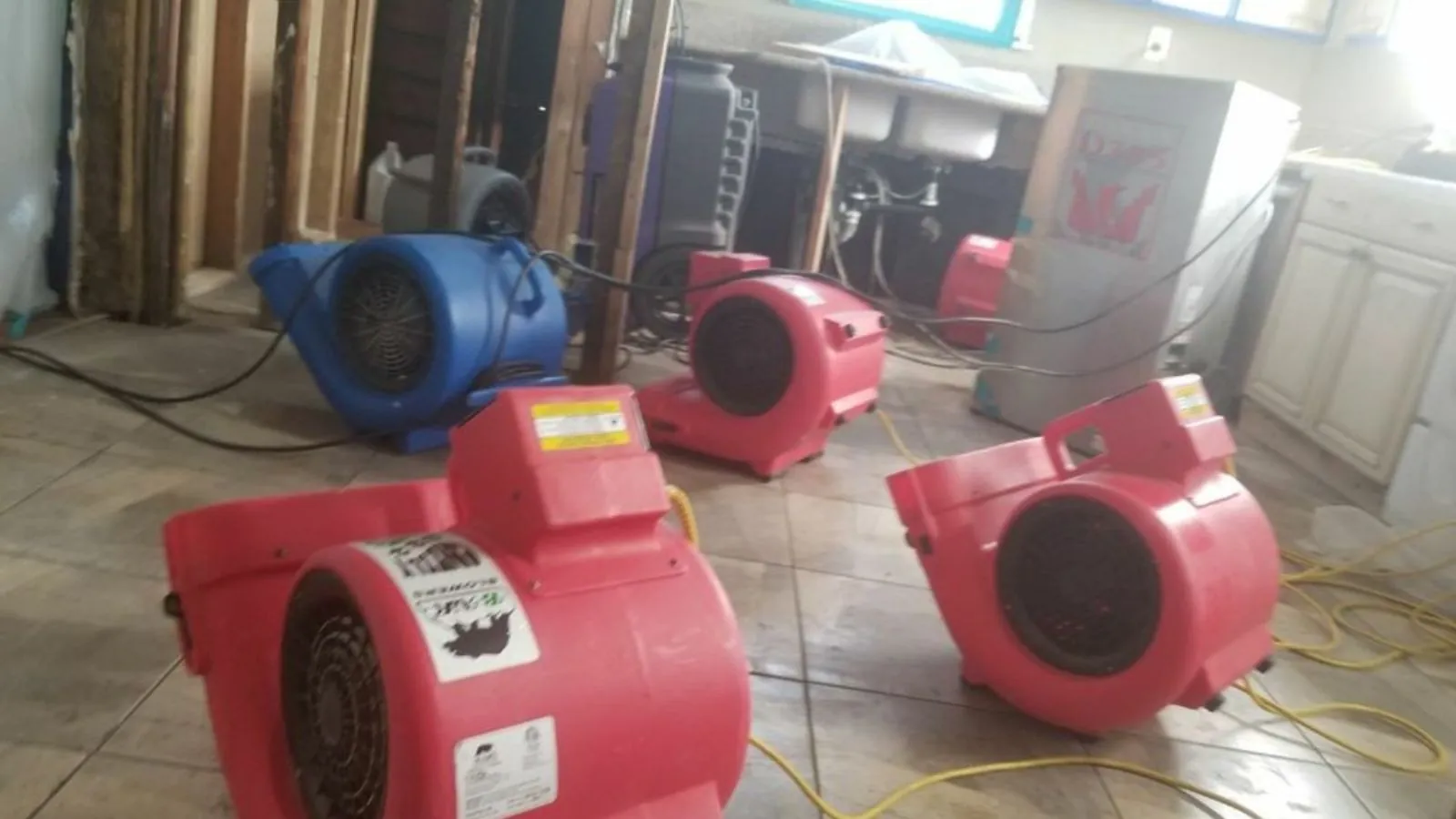
Plenty of water events are small enough to handle with towels and a fan. A glass of water on the floor or a few drips from a sink do not need a crew. The trouble starts when water soaks into materials you cannot see, and many homeowners cannot tell the difference until weeks later.
This guide draws the line honestly. We would rather tell you to handle a small spill yourself than send a truck for it.
What you can usually handle yourself
- A small spill or overflow that you mop up within minutes.
- A few drips from a leaky faucet caught right away.
- Water on a sealed hard floor that has not reached walls or cabinets.
- A wet bath mat or a damp towel.
- Condensation on windows and sills.
Use towels or a wet vacuum, then run a fan and open windows if the weather allows. Check again after a day to see that no dampness remains.
Signs the job is bigger than it looks
Water reached carpet or padding
Padding holds water and dries slowly. Surface drying will not reach it.
Water got behind baseboards
Wall bottoms wick moisture upward where you cannot see.
The area is large
More than a few square feet of wet material needs real equipment.
The water was dirty
Water from sewage, floods or outdoor sources is contaminated.
A musty smell the next day is a sign that something is still wet. Floors that cup and paint that bubbles appear days later and show that moisture stayed.
Why fans and a dehumidifier are not the same as a drying plan
Fans move air over surfaces. A drying plan places air movers and dehumidifiers so that air flows across wet materials, picks up moisture and leaves through a dehumidifier. Then meters verify that the materials reached normal levels.
The National Weather Service in Tampa Bay lists the wet season as May 25 through October 10. Outdoor air in that window is heavy with moisture, so opening windows can add humidity instead of drying a room. Keep the house closed and run dehumidifiers.
| Tool | What it does well | What it cannot do |
|---|---|---|
| Towels and mop | Remove surface water. | Reach water in padding or walls. |
| Wet vacuum | Pulls water from carpet surfaces and hard floors. | Remove water from subfloors. |
| Box fan | Moves air across surfaces. | Dry wall cavities or remove humidity. |
| Home dehumidifier | Lowers humidity in a room. | Dry large wet areas quickly. |
| Professional equipment and meters | Dry materials and verify results. | Replace repairs that a source needs. |
The right tool depends on how much water there was and what it touched.
What to do in the first hour
Stop the source
Shut off the valve or fixture feeding the water.
Remove standing water
Use towels, a mop or a wet vacuum.
Lift belongings
Move rugs, furniture legs and boxes off wet floors.
Photograph and decide
Take photos, then decide whether to call for help.
If the area stays damp after a day or reaches carpet or walls, call for help. Carpet water damage restoration and water extraction show how professional work goes.
When to call right away
- Water came from sewage, a flood or outdoor drains.
- The leak is inside a wall or ceiling.
- Water is near outlets, the panel or appliances.
- The affected area is larger than a bathroom floor.
- You smell mold or see growth.
- You cannot find the source.
Never run electrical equipment in standing water
If water is near outlets or cords, stay out and turn off power at the panel only if you can reach it dry. Otherwise call an electrician or the utility.
How to tell if your DIY drying worked
Check in a day. The area should feel normal to the touch, the smell should be neutral and the floor or wall should look the same as dry sections. If anything still feels cool, damp or sour, moisture remains and a meter reading is the next step.
Run fans and a dehumidifier for several days, not hours, and keep doors closed so the machines work on the wet room and not the whole house.
According to the published ANSI/IICRC S500 water damage standard, the speed and method of drying decide how much of a structure can be saved, which is why this guide stresses acting early.
Local note on humidity
The National Weather Service Tampa Bay wet season runs May 25 through October 10. Homes in Valrico, Dover and Durant face the most humid drying conditions then, which is why a closed house with dehumidification often beats open windows and fans alone.
Drying questions Valrico homeowners ask
Can I dry a wet carpet myself?
Sometimes for a small clean-water spill if you act within hours. If padding is soaked or the area is large, professional extraction and drying work better.
How long should I run fans?
Until the materials are verified dry. Time alone does not tell you. A moisture meter does.
Should I open windows to dry a room?
In humid Florida weather, usually not. Outdoor air may be wetter than indoor air. Use air conditioning and dehumidifiers instead.
Will a home dehumidifier be enough?
For a small damp room, it may help. For a big wet area or wet walls, it is usually not enough.
How do I know if I missed something?
Watch for odor, cupping, bubbling paint and stains that spread. A moisture meter reading gives a clear answer.